Capture the program
We define speech, music, playback, stage, audience, and control expectations so the system brief reflects how the space is used during a normal week.

Great system outcomes rarely come from a product list alone. They come from coverage modeling, loudspeaker placement, power structure, network routing, and a commissioning path that field teams can follow under real deadlines.
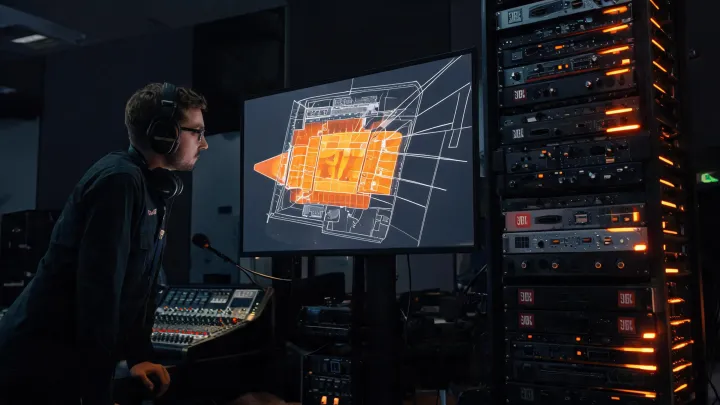
Our services are written for integrators, venue owners, production managers, consultants, and dealer teams who need decisions documented before hardware ships. The work starts with listening requirements and audience geometry, then moves into product families that match the acoustic task. For touring programs, the emphasis is fast rigging, repeatable presets, and a package that can be advanced across rooms. For installed venues, the emphasis shifts to architectural integration, service access, and intelligibility across every seat. The same discipline applies to cinema rooms, education auditoriums, conference spaces, hospitality zones, and portable PA programs.
| Service track | What the team evaluates | Output you receive |
|---|---|---|
| Venue coverage review | Audience geometry, trim height, sightlines, speech range, music program, and low-frequency boundaries. | Speaker family shortlist, aiming priorities, fill strategy, and notes for dealer quotation. |
| Line array and subwoofer planning | Array length, splay behavior, flown or ground-stacked constraints, cardioid needs, and stage spill control. | System block diagram, subwoofer alignment concept, and rigging questions to resolve before installation. |
| Electronics and control alignment | Amplifier headroom, mixer I/O, DSP presets, monitoring, networking, and operator workflow. | Signal path summary, amplifier channel plan, control notes, and handoff checklist. |
| Commissioning support | Verification of polarity, delay, limiter intent, room response, gain structure, and user control labeling. | Startup checklist, tuning observations, service notes, and training topics for the local crew. |
Audio projects become expensive when assumptions stay vague. Our method turns those assumptions into visible decisions early: what the room must do, where energy can go, how the crew will operate the system, and which products create the cleanest path. The process also catches common failure points such as undersized amplifier channels, monitors fighting main arrays, subwoofer energy building in the wrong zone, or conference systems that sound fine at the table and fall apart at the far wall. It is practical, not theatrical: the deliverables help the buyer compare options, help the installer quote responsibly, and help operators understand the system before the first event.
We define speech, music, playback, stage, audience, and control expectations so the system brief reflects how the space is used during a normal week.
Ceiling height, balcony edges, reflective surfaces, rigging points, seat count, and cable paths are translated into loudspeaker placement choices.
Loudspeakers, PA speakers, subwoofers, line arrays, monitors, amplifiers, and mixers are narrowed by output, control, service, and availability.
Installers and operators receive a concise package of assumptions, settings to verify, and questions that must be resolved before the room opens.
Send drawings, seating count, program type, or a simple description of the venue. We will respond with the first questions a systems team should answer before a quote becomes a promise.
Request Service Guidance