Acoustic targets first
Product planning begins with audience coverage, intelligibility, and output goals before enclosure form or feature lists take over.

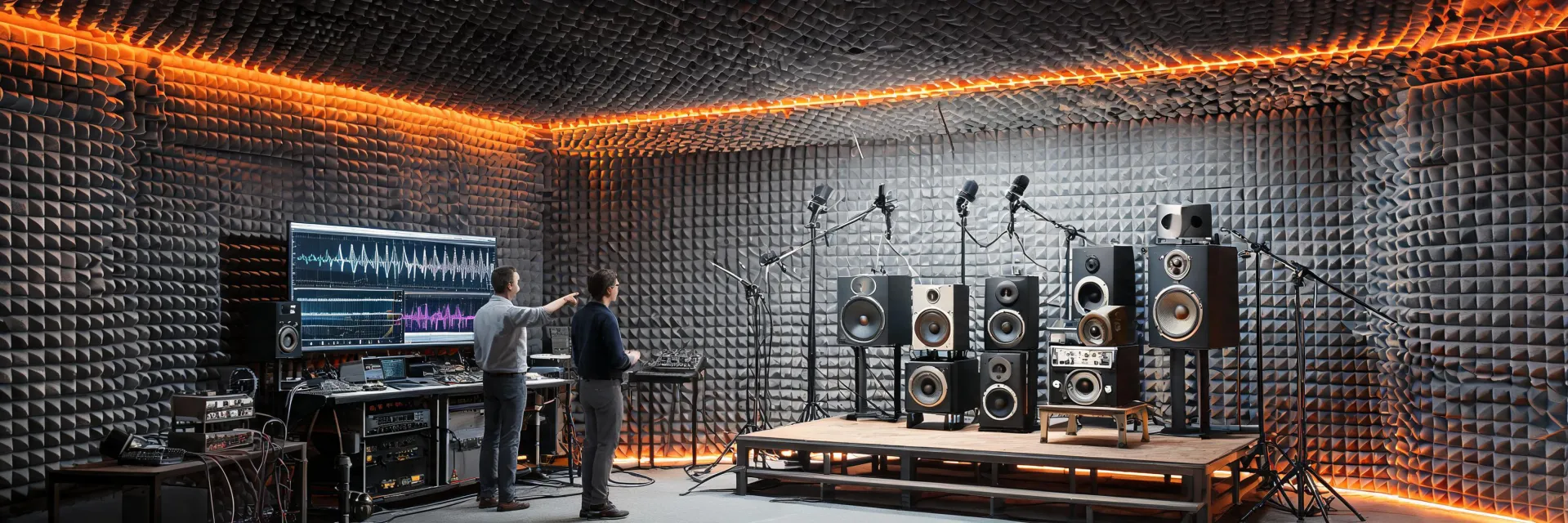
The brand story is not only a timeline of speaker cabinets. It is a discipline of translating acoustic research, touring demands, cinema expectations, and installed venue realities into products that crews can trust when the audience is already seated.
Design lab perspectiveJBL Professional serves buyers who expect loudspeakers to work as part of a complete venue system. That expectation changes the way products are developed. A line array is evaluated with the subwoofer strategy beside it. A stage monitor is judged against the mix position, feedback limits, and artist movement. A PA speaker is only useful when power, protection, mounting, cable path, and serviceability make sense for the owner. The roadmap focuses on repeatable deployment: clearer selection tools, smarter electronics integration, faster commissioning references, and audio packages that make sense to touring engineers as well as facilities teams.
Innovation is treated as an operating practice. It means measurement data that answers real room questions, enclosure decisions that survive repeated handling, presets that reduce guesswork without hiding control, and documentation that supports a dealer after the first purchase. The goal is straightforward: keep the creative energy of live sound while reducing the uncertainty that makes commercial audio projects drift.
The work spans six product families across this catalog: loudspeakers, PA speakers, subwoofers, line array systems, stage monitors, and amplifiers and mixers. A design pass is sized to a documented coverage map and an agreed SPL target rather than an open-ended loudness claim, because output beyond the planned audience geometry is treated as a risk, not a feature. We also state the boundaries plainly: sustained level is bounded by amplifier thermal and power-compression headroom, low-frequency control depends on whether the venue can host cardioid or end-fire subwoofer spacing, and tuned performance only holds with correct commissioning and routine service.
In professional audio, milestones matter when they improve the working life of a buyer, integrator, dealer, or operator. A product launch is only meaningful if it helps a venue open reliably, lets a touring crew advance a system with fewer unknowns, or gives an education campus the same speech clarity across multiple halls. The milestones below are written as operating commitments rather than museum labels.
Product planning begins with audience coverage, intelligibility, and output goals before enclosure form or feature lists take over.
Rigging, grille durability, handles, service access, and amplifier protection are evaluated as part of the system outcome.
Every package leaves with a written commissioning sheet: polarity, delay times, limiter intent, gain structure, and the measured coverage target the room was signed off against, so a later service visit can compare against a known baseline rather than guesswork.
Clear documentation and project context help local partners maintain the system after the first event.
The strongest professional audio programs connect many roles without forcing every decision through one person. Consultants need technical language. Dealers need a clean product path. Integrators need mounting and signal clarity. Operators need controls that make sense at show time. Venue owners need uptime, training, and a practical service path. JBL Professional content, products, and support are organized around that network because audio is rarely a solo purchase.
Tell us how the room is used, who maintains it, and what failure would look like during a show. The answer will point to the right product family and the right partner conversation.
Start a Partner Brief